
What Is Dermaplaning? Benefits, What to Expect, and How It Compares to Shaving
Dermaplaning gently removes dead skin and peach fuzz for instantly smoother, brighter skin. Here is what it actually is, the benefits, what to expect at a session, and how it differs from shaving at home.
Dermaplaning has earned a reputation as one of the simplest, fastest ways to refresh the skin. It is painless, requires no downtime, and leaves you with that just-polished look that primer and foundation glide over beautifully. But there is also a lot of confusion about what it actually is, particularly the recurring question: is dermaplaning just shaving?
The short answer is no. Dermaplaning is a professional manual exfoliation treatment that removes dead skin cells and vellus hair (peach fuzz) with a sterile single-use blade. A razor at home shaves hair only and does not touch the dead skin layer the way dermaplaning does. The technique, the tool, and the result are all different.
This article explains what dermaplaning really is, the benefits, the regrowth myth, and what to expect at dermaplaning in Cambridge, MA.
What Is Dermaplaning?
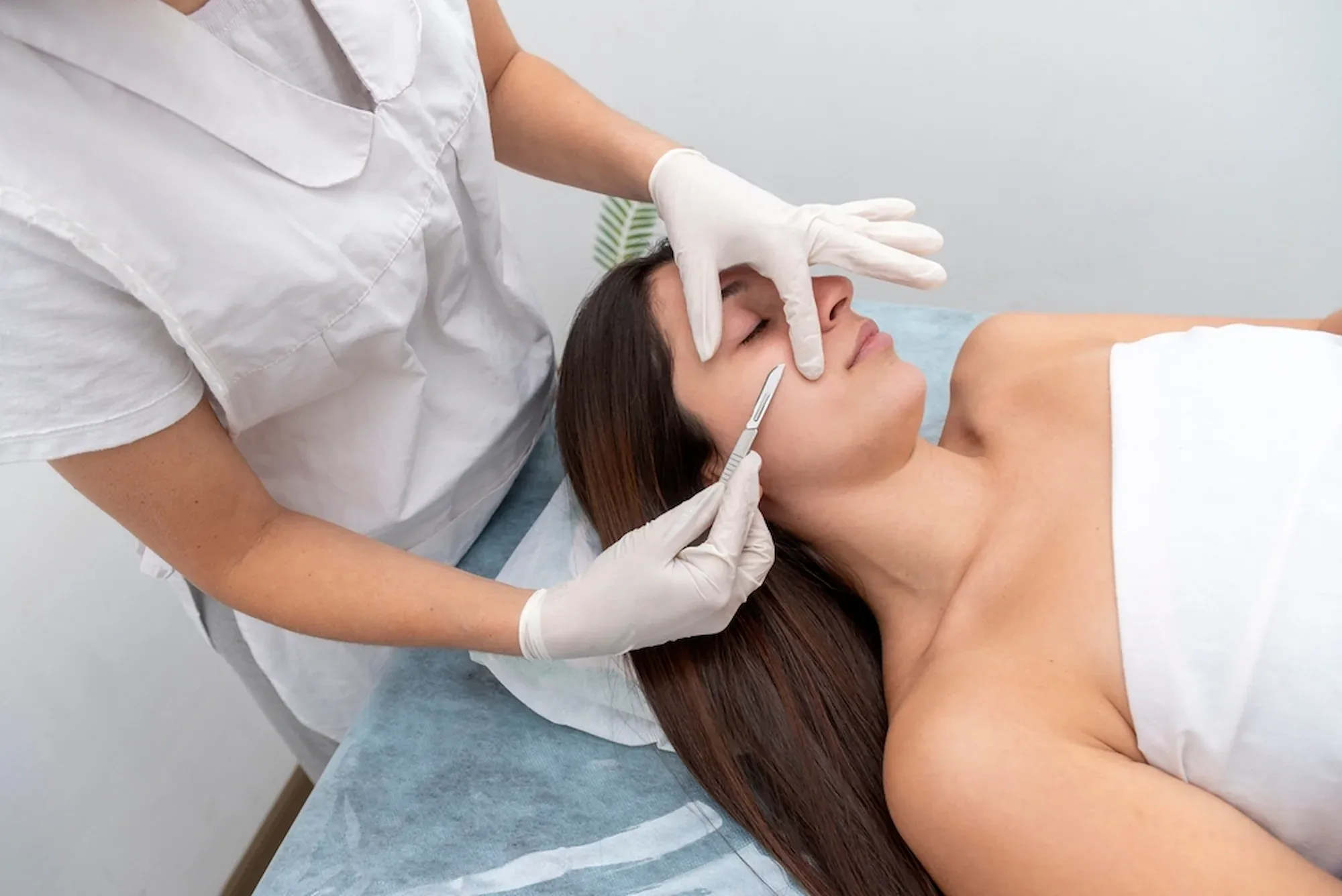
Dermaplaning is a manual exfoliation treatment in which a trained aesthetician or medical provider holds a sterile single-use blade at a precise 45-degree angle and gently glides it across the skin. The blade removes two things at once: the outermost layer of dead skin cells and the fine, soft vellus hair (commonly called peach fuzz). The skin underneath is immediately smoother, brighter, and more receptive to skincare products.
It is a non-invasive treatment, no chemicals, no needles, no light energy. The blade never cuts into the skin. Performed correctly, dermaplaning is a surface-level exfoliation that is appropriate for almost every skin type.
What dermaplaning is not
Dermaplaning is not shaving. A razor at home is designed to cut surface hair quickly with multiple blades and lubrication. It will not remove dead skin in the way a single-use surgical-grade blade angled by a trained provider does. The depth, the technique, and the supervision are different.
Benefits of Dermaplaning
Patients book dermaplaning for several distinct reasons, often more than one at a time.
- Instantly smoother and brighter skin. The buildup of dead skin cells dulls the surface. Removing them reveals fresher skin underneath.
- Effortless peach fuzz removal. Vellus hair traps oils and product residue and casts a soft shadow on the face. With it gone, makeup applies more cleanly.
- Better product absorption. Skincare actives (vitamin C, retinol, hyaluronic acid) penetrate more effectively when the dead skin barrier is exfoliated.
- Softer look of fine lines. Light surface exfoliation can soften the appearance of fine lines, particularly around the mouth and forehead.
- Painless and no downtime. You can return to normal activity immediately.
Dermaplaning vs Shaving: What Is the Difference?
This is the most asked question about dermaplaning, and the answer matters because the two treatments work on different layers and produce different results.
| Dermaplaning | Shaving at Home |
|---|---|
| Sterile single-use surgical-grade blade | Multi-blade razor designed for fast hair cutting |
| Held at a precise 45-degree angle | Held flat against the skin |
| Performed by a trained aesthetician | Performed by you, often in a hurry |
| Removes dead skin cells AND vellus hair | Removes surface hair only |
| Result: smoother, brighter skin + hair removed | Result: hair removed |
| Every 3 to 4 weeks | Daily to weekly forever |
Will my hair grow back thicker after dermaplaning?
No. This is one of the most persistent myths about both dermaplaning and shaving. Vellus hair always grows back the same color, texture, and density it was before. The reason hair looks thicker after a razor cut is that the blunt end of the cut hair feels coarser as it grows back to the same length. With dermaplaning, the same physics applies: the hair regrows to its prior state, soft and fine.
Is Dermaplaning Safe? Who Is It For?
Dermaplaning is appropriate for almost all skin types. It is particularly well suited to dry, dull, or congested skin and to patients who want a quick refresh before a special event. It works for all Fitzpatrick skin tones because no light energy or thermal effect is involved.
There are some situations where dermaplaning should be avoided or postponed:
- Active acne breakouts (the blade can irritate inflamed lesions)
- Cold sore outbreaks in the treatment area
- Open cuts, wounds, or active eczema flares
- Very sensitive or rosacea-prone skin (your provider will assess)
Your provider will review your skin and confirm that dermaplaning is a good fit during the consultation.
What to Expect at a Dermaplaning Appointment
A typical session takes 30 to 45 minutes from start to finish.
Before
Arrive with clean skin, no makeup or heavy moisturizer. Your provider will review your skin and goals.
During
Your provider cleanses the skin thoroughly, then gently glides the sterile blade at a precise angle across each section of the face. The sensation is light, often compared to a gentle scratch. Most patients find it relaxing.
After
The skin is calm, smooth, and bright immediately. Optional add-ons such as a soothing mask, a hydrating booster, or a HydraFacial may be performed during the same visit. SPF is applied before you leave.
Downtime
None. You can return to work, exercise, or social events immediately. Skin can feel slightly more sensitive to active ingredients for 24 to 48 hours, so most providers recommend pausing retinol or strong acids overnight.
How Often Should You Get Dermaplaning?
Most patients book dermaplaning every 3 to 4 weeks, which aligns with the natural skin cell turnover cycle. More frequent sessions are not recommended because the skin needs time to regenerate between treatments.
How Dermaplaning Pairs with a HydraFacial
Dermaplaning and HydraFacial in Cambridge, MA are frequently paired in one appointment. The logic is simple: dermaplaning removes the dead skin barrier, and the HydraFacial that follows can deliver hydrating serums, antioxidants, and brightening boosters more effectively into the freshly resurfaced skin. Many patients book this pairing before a wedding, photo session, or special occasion.
Frequently Asked Questions
What is dermaplaning?
Dermaplaning is a professional manual exfoliation that removes dead skin cells and vellus hair (peach fuzz) using a sterile single-use blade held at a precise angle by a trained provider.
What are the benefits of dermaplaning?
Smoother, brighter skin, peach fuzz removed, better makeup application, deeper skincare penetration, softer look of fine lines, painless, no downtime.
Is dermaplaning safe?
Yes, for most skin types when performed by a trained provider with a sterile single-use blade. Avoid during active acne, cold sore outbreaks, or open wounds.
Is dermaplaning just shaving?
No. Dermaplaning removes dead skin AND vellus hair using a specialized blade and technique. Shaving cuts surface hair only.
Does hair grow back thicker after dermaplaning?
No. Vellus hair grows back the same color, texture, and density it was before. The myth comes from the blunt regrowth feel, not actual change in the hair itself.
How often should I get dermaplaning?
Every 3 to 4 weeks, aligned with the natural skin cell turnover cycle.
Can I dermaplane at home?At-home tools exist, but they do not match the precision, sterility, or technique of professional dermaplaning. The risk of nicks, irritation, and uneven exfoliation is much higher at home.Can I combine dermaplaning with a HydraFacial?
Yes. The two treatments are frequently paired in the same visit. Dermaplaning resurfaces, and the HydraFacial delivers boosters more effectively.
Book Dermaplaning in Cambridge, MA
If you are curious about whether dermaplaning is right for your skin, the easiest next step is a consultation at our Cambridge studio. Alba Cestari, our senior aesthetician, performs every dermaplaning session and can pair it with a peach fuzz treatment or HydraFacial booster for your most polished result. Call (617) 352-4230 or book online to schedule dermaplaning in Cambridge, MA.