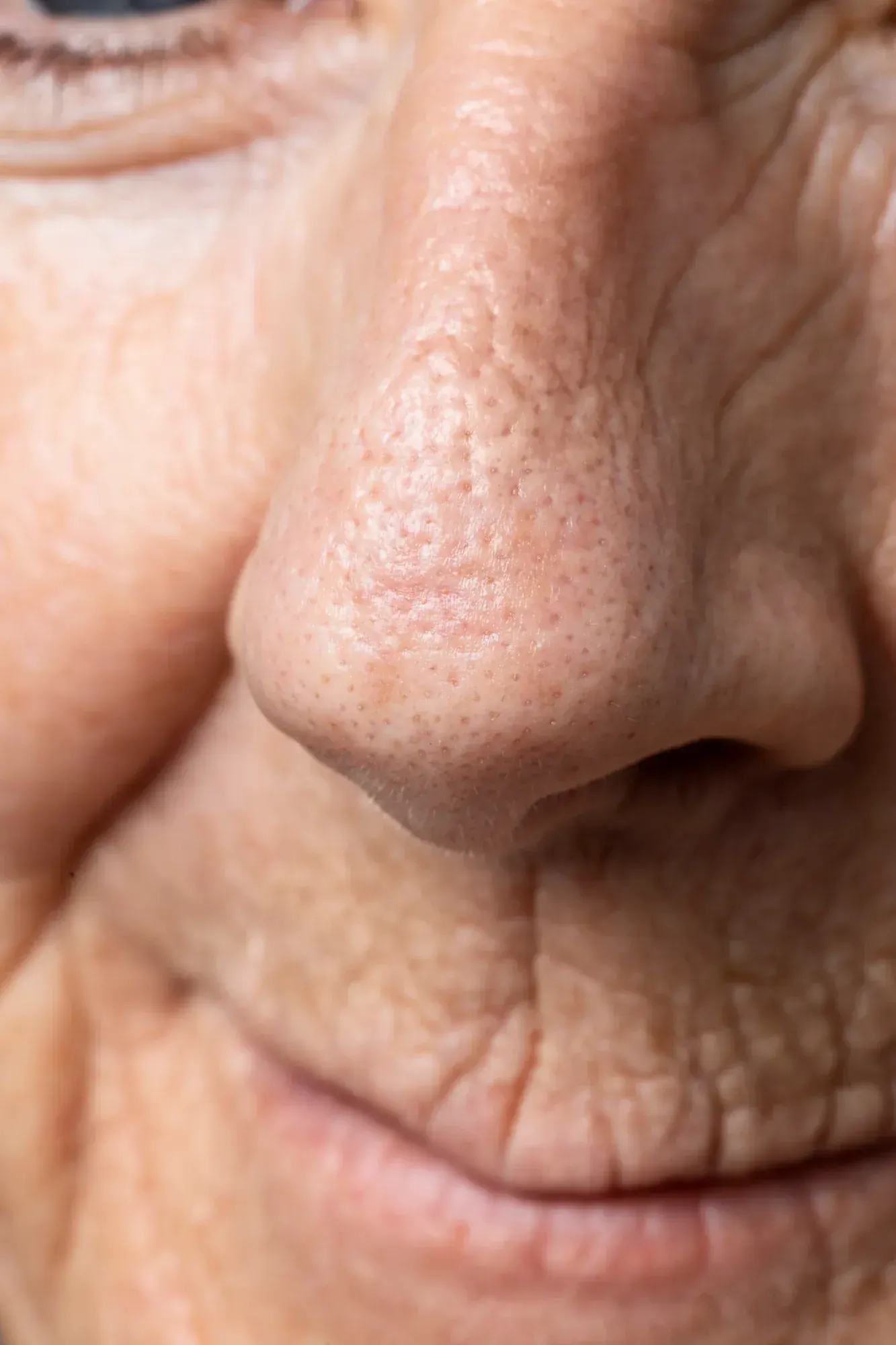



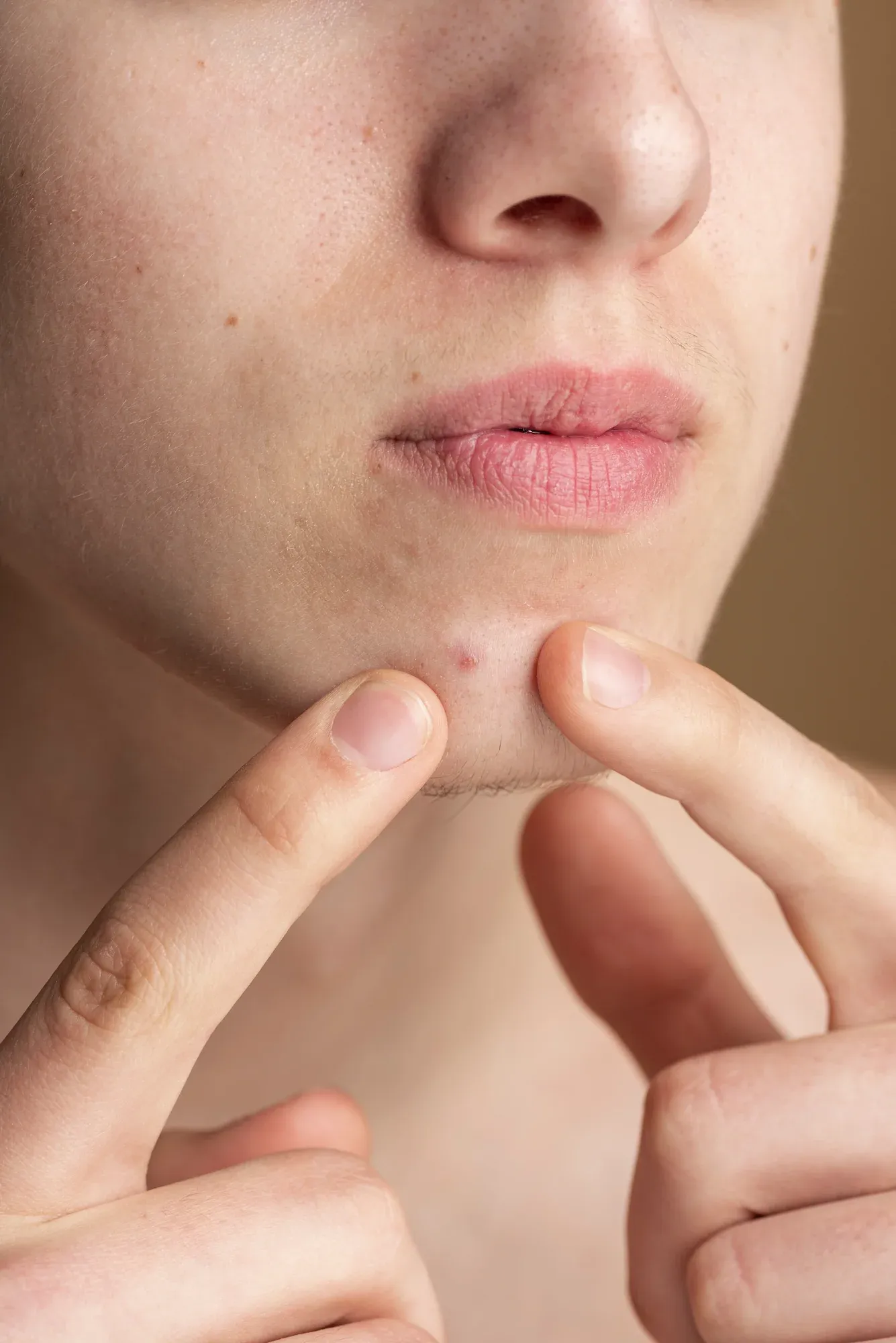
Every pore on the face is the surface opening of a hair follicle paired with a sebaceous gland that produces oil to lubricate skin and hair. The structural diameter of that opening is largely determined by genetics, hair follicle density, and natural sebum output. The American Academy of Dermatology identifies excess oil, sun damage, and decreased skin elasticity as the three main reasons pores look larger than they actually are.
When sebum mixes with dead skin cells inside the follicle, the resulting plug stretches the pore opening from the inside and oxidizes at the surface, creating the dark speck patients call a blackhead or sebaceous filament. Each plug holds the pore open wider than it would sit when clear, which is why the appearance of pores fluctuates dramatically between a freshly cleansed face and the end of a long day. Clinical pore extraction with HydraFacial in Cambridge, MA uses vortex suction to clear those plugs without manual squeezing.
Skin elasticity also plays a major role. The dermis surrounding each pore holds the opening in place. As collagen and elastin decline with age, sun exposure, and oxidative stress, the supporting tissue around the pore loosens and the opening sags, looking larger and more oval, especially on the cheeks. Stimulating new collagen with microneedling in Cambridge, MA firms the tissue around the pore so the opening sits tighter long term.