



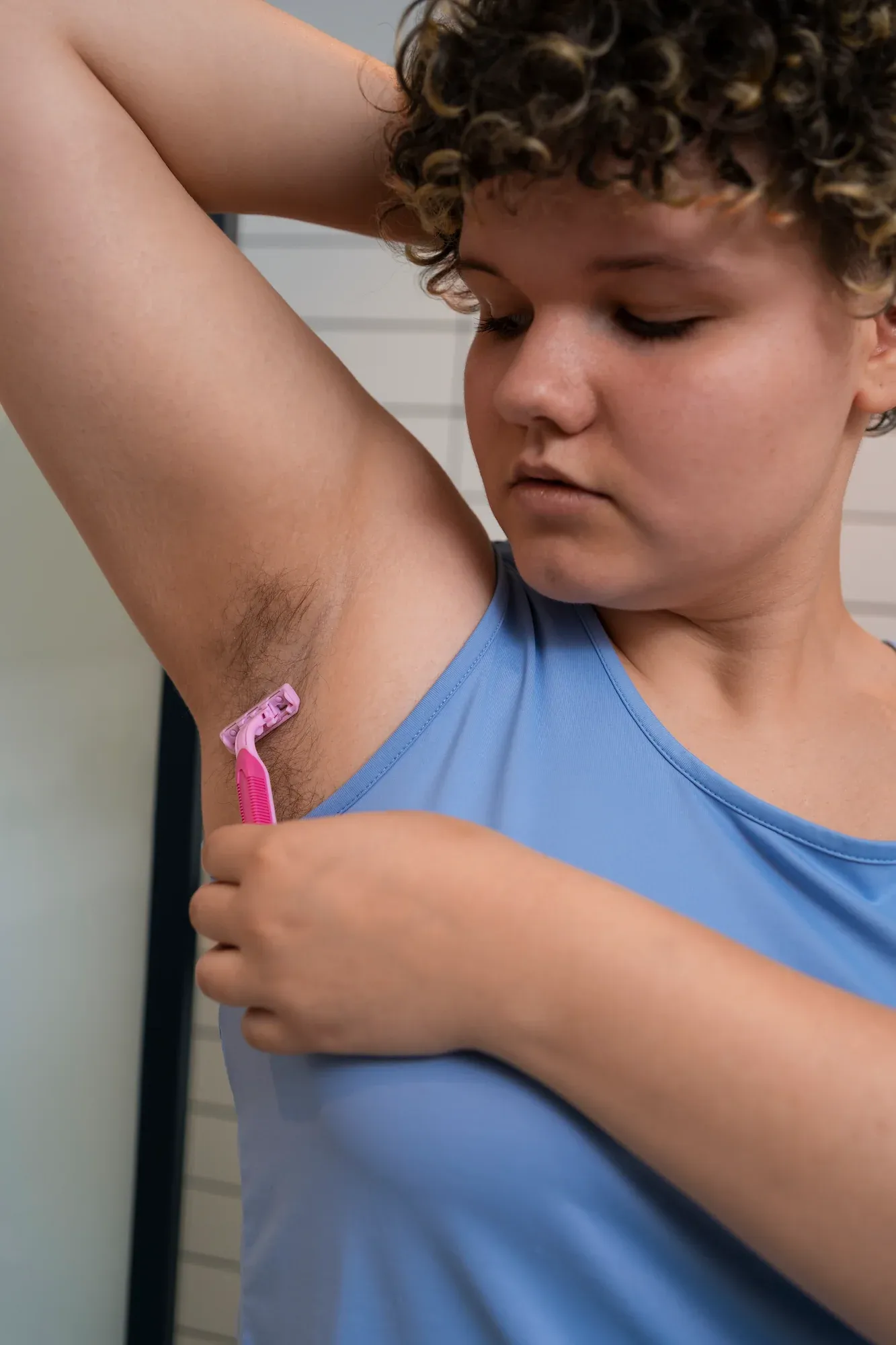
Smooth, freshly treated skin after unwanted body hair treatment at Radiant Laser MD Cambridge

Unwanted Body Hair Treatment in Cambridge & Boston, MA

Common AreasLegs, arms, back, chest, bikini
Best TreatmentLaser hair removal
Sessions6 to 8 plus maintenance
Safe ForAll skin types and all bodies
Patient considering unwanted body hair treatment at Radiant Laser MD Cambridge

What Is Unwanted Body Hair?

Recognizing the Signs

Unwanted body hair refers to terminal hair growth on the legs, arms, back, chest, abdomen, bikini area, or underarms that a patient would rather not have to shave, wax, or otherwise manage week after week. It is a personal definition, not a medical diagnosis, and what one person considers ordinary another may want permanently reduced.

When you find yourself shaving every morning, waxing on a strict schedule, or planning your outfit around regrowth, you are dealing with the upkeep that comes with unwanted body hair. Stubble, ingrown bumps, and razor irritation often appear within a day, and the cycle starts again.

Many patients describe the time, cost, and skin discomfort as the most exhausting part. Some seek body hair reduction as part of gender-affirming care, others want a low-maintenance routine before a trip or wedding, and others simply want to stop shaving entirely. All of these reasons are valid, and the consultation at Radiant Laser MD starts there.

Anatomy of body hair follicle showing terminal hair growth at Radiant Laser MD Cambridge

Why Body Hair Grows the Way It Does

Understanding the Root Causes

Hair follicles produce two main hair types. Vellus hair is the fine, light fuzz across most of the body, while terminal hair is the thicker, pigmented growth on the scalp, underarms, pubic area, and, depending on individual biology, the legs, arms, chest, back, and face. Whether a follicle produces vellus or terminal hair is set by genetics and hormones, especially androgens. The National Institute of Diabetes and Digestive and Kidney Diseases notes that androgen sensitivity determines how dense and dark body hair becomes in any given location.

Body hair distribution also varies with ethnicity, ancestry, and life stage. Puberty, pregnancy, perimenopause, and hormone therapy can shift the pattern. For patients receiving feminizing hormone therapy, terminal body hair often becomes a primary concern, and durable reduction through laser hair removal in Cambridge, MA can be a meaningful part of care.

Shaving and waxing do not change how a follicle behaves. They only remove what is visible at the surface, which is why the hair returns at the same pace and pattern unless the follicle itself is targeted. That is the gap laser hair removal is designed to close.


Candela GentleMax Pro and Elite iQ laser platforms at Radiant Laser MD Cambridge

How Lasers Target Body Hair

Wavelengths, Melanin, and Skin Tone

Laser hair removal relies on selective photothermolysis. The laser emits a wavelength of light absorbed preferentially by melanin in the hair shaft, which heats the follicle and disables its ability to produce new hair. The deeper the wavelength penetrates, and the better it bypasses melanin in the surrounding skin, the safer the treatment is for darker skin tones.

At Radiant Laser MD we use two FDA-cleared platforms. The Elite iQ alexandrite is highly effective for lighter skin and fine hairs, while the Candela GentleMax Pro Nd:YAG, at 1,064 nm, is widely accepted as the safest wavelength for Fitzpatrick IV through VI skin. We use the FDA-cleared Skintel melanin reader before treatment to confirm the right settings, so patients with darker skin who have been turned away elsewhere can be treated safely here.

Most body areas need six to eight sessions spaced about four to eight weeks apart to catch follicles in the active growth phase. Annual touch-ups help maintain results as hormone shifts wake new follicles, and complementary care like a body HydraFacial can keep the skin calm between sessions.

What Drives Unwanted Body Hair Growth?

Several biological and lifestyle factors influence body hair density, distribution, and how disruptive the upkeep becomes for any given patient.

Genetics and Ancestry

Inherited follicle density and hair texture set the baseline pattern across the legs, arms, chest, back, and bikini area.

Androgen Levels

Testosterone and related hormones convert vellus hair to terminal hair, increasing thickness and pigmentation in androgen-sensitive areas.

Life-Stage Hormone Shifts

Puberty, pregnancy, perimenopause, and menopause can change where and how densely body hair grows.

Gender-Affirming Hormone Therapy

Estrogen therapy can slow new terminal hair, but existing body hair often needs durable reduction through laser treatment.

Medications and Health Conditions

Some medications and endocrine conditions, such as PCOS, increase body hair density beyond what shaving can comfortably manage.

Hair Removal Cycle Fatigue

Daily shaving, waxing, and depilatory creams compound skin irritation and time cost, making upkeep feel constant.

Radiant Laser MD treatment room interior in Cambridge Massachusetts

Why Choose Radiant Laser MD for Unwanted Body Hair Care in Cambridge, MA

Expert Care in Cambridge

  • All Bodies Welcome
  • Safe for All Skin Tones
  • Pay As You Go
  • Two Convenient Locations

Treatment Options Comparison

Finding Your Best Approach

Treatment Best For Session Time Results Timeline Maintenance
Laser Hair Removal with Candela GentleMax Pro Permanent reduction on any body area 15-60 min by area 6-8 sessions for 80-95% reduction Annual touch-ups
HydraFacial Body HydraFacial soothes shaved or waxed skin 30-45 min Immediate hydration Monthly
Dermaplaning Surface exfoliation for face only 30-45 min Immediate smoothness Every 3-4 weeks
Patient evaluating unwanted body hair on legs at Radiant Laser MD Cambridge

You May Be Experiencing Unwanted Body Hair If...

Recognizing When to Seek Help

  • Quick Stubble Regrowth
  • Constant Waxing or Threading
  • Skin Irritation From Hair Removal
  • Self-Conscious in Swimwear or Short Sleeves
  • Gender-Affirming Hair Reduction

Frequently Asked Questions

About Unwanted Body Hair

Can I prevent unwanted body hair from coming back?

Shaving and waxing only remove what is visible at the surface, so the same follicles keep producing hair. Laser hair removal disables the follicle itself, which is the only durable way to stop regrowth in a given treatment area.

How do I know which body areas can be treated?

Almost any body area outside the eye orbit can be treated. We commonly treat legs, arms, underarms, back, chest, abdomen, and the bikini area. Your consultation maps your priorities and the right wavelength for each area.

How long until I see results?

Many patients see meaningful thinning after the first two or three sessions. Full reduction of 80 to 95 percent typically develops over six to eight sessions spaced four to eight weeks apart, as follicles cycle into the active growth phase.

Is laser hair removal safe for darker skin tones?

Yes, at Radiant Laser MD it is. We use the FDA-cleared Skintel meter to read your skin tone, then select the Nd:YAG wavelength on the GentleMax Pro for Fitzpatrick IV through VI, which is considered the gold standard for darker skin.

Is laser hair removal appropriate for trans and nonbinary patients?

Absolutely. Many of our patients pursue body hair reduction as part of gender-affirming care. Our team uses your name and pronouns and works through your priority areas at a pace that fits your overall care plan.

What can I do at home between sessions?

Shaving between sessions is fine and actually preferred, since the laser needs the hair root intact. Avoid waxing, plucking, and epilating between visits, and use SPF on treated areas exposed to sun.

Can laser hair removal be combined with other body treatments?

Yes, many patients pair their laser sessions with a body HydraFacial or skin-soothing care to keep the treatment area smooth and calm. We sequence appointments so the skin is intact before any laser pass.

When should I see a professional about unwanted body hair?

If shaving, waxing, or depilatory creams are taking too much time, irritating your skin, or affecting your confidence, a consultation is a reasonable next step. We can also help if you are starting gender-affirming care or experiencing rapid changes in body hair pattern.

Location896 Beacon Street, Unit 308
Boston, MA, 02215
(617) 352-4230
Location12 Eliot Street, Suite #201
Cambridge, MA, 02138
(617) 352-4230

Schedule Today Your Free Consultation

Scientific References